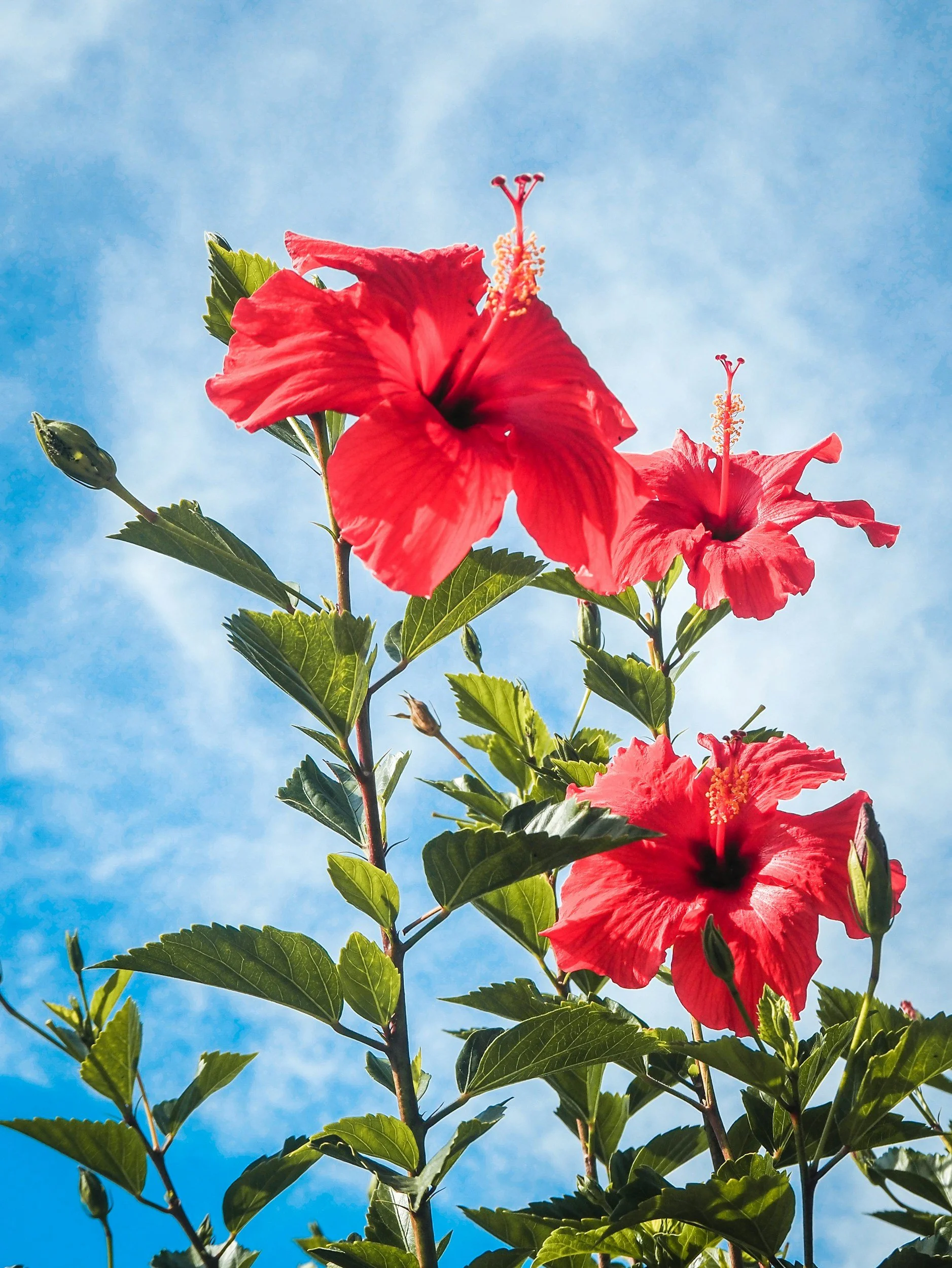
Hibiscus
Hibiscus sabdariffa
Sometimes called the "flower of radiance," hibiscus brings gentle exfoliation, antioxidants, and a beautiful vibrancy to botanical skincare. Rich in naturally occurring fruit acids and polyphenols, hibiscus has long been used in traditional beauty practices to support dull, tired-looking skin.
Best For
Dull or lackluster skin
Uneven-looking texture
Mature skin
Dry skin needing brightness
Skin that appears tired or congested
Why Skin Loves Hibiscus
Hibiscus petals naturally contain anthocyanins (the pigments responsible for their deep color), polyphenols, and naturally occurring organic acids. These compounds provide antioxidant support and help promote a smoother, more refreshed appearance.
Unlike harsh exfoliants, powdered hibiscus offers a very gentle resurfacing effect when mixed into masks and cleansing treatments.
Naturally Rich In
Anthocyanins – antioxidant compounds that help protect against environmental stressors.
Polyphenols – plant compounds known for their protective properties.
Organic acids – contribute to mild exfoliation and improved skin softness.
Mucilage – provides a soft, conditioning feel.
Skin Barrier + pH Notes
Healthy skin maintains a slightly acidic surface, often referred to as the acid mantle, generally between pH 4.5–5.5. This environment supports barrier function and microbial balance.
Because hibiscus naturally contains organic acids, it contributes mild acidity to fresh botanical preparations. When blended with soothing herbs such as marshmallow root or oat, hibiscus can create formulas that feel brightening while remaining gentle.
Since your powders are mixed fresh and rinsed away, they are intended to support—not dramatically alter—the skin's natural pH balance.
Botanical Actions
Antioxidant Support
The deep crimson color of hibiscus comes from anthocyanins, powerful plant antioxidants that help defend against oxidative stress.
Gentle Exfoliation
Naturally occurring fruit acids help soften the appearance of rough texture and reveal a more radiant complexion.
Hydration Support
The mucilage present in hibiscus contributes slip and softness, preventing masks from feeling overly drying.
Complexion Brightening
Hibiscus is often chosen in botanical skincare to revive skin that appears dull or fatigued.
Traditional Uses
Across parts of Africa, Asia, and the Caribbean, hibiscus has been used in herbal preparations for both internal wellness and external beauty rituals. In botanical skincare traditions, it has been incorporated into masks, rinses, and infused oils for its refreshing and beautifying qualities.
How to Use
Mix with:
Hydrosol
Water
Honey
Yogurt
Clay
Facial oil
Leave on for 5–10 minutes and rinse with warm water.
Pairs Well With
✿ Marshmallow Root — adds softness and hydration
✿ Rose — supports sensitive skin
✿ Oat — helps buffer and soothe
✿ Manjistha — promotes a more even-looking complexion
✿ Chamomile — balances hibiscus's naturally active nature
Esthetician Note
Hibiscus shines in formulas designed for radiance rather than deep exfoliation. Pairing it with calming herbs creates a more balanced treatment suitable for a wider range of skin types.
Caution
Because hibiscus contains naturally occurring acids, extremely sensitive or compromised skin may prefer lower concentrations or shorter application times. Always patch test new botanical ingredients.
Botanical Name
Hibiscus sabdariffa
Plant Part Used
Flower
Energetics
Cooling • Brightening • Softening
Found In