
Calendula
Calendula officinalis
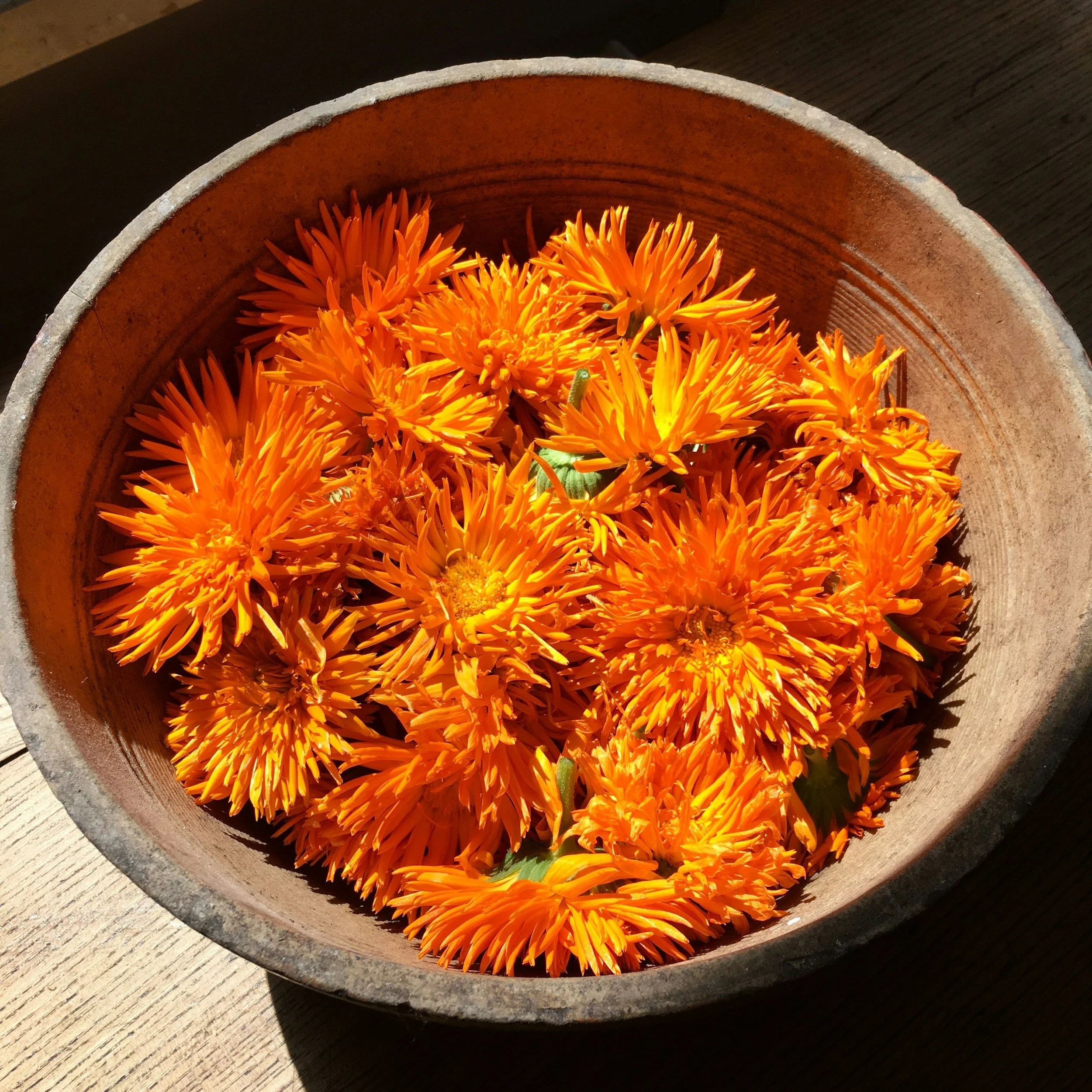
Known as the "sun herb" of traditional herbalism, calendula has been used for centuries to comfort, soften, and support the skin. Its vibrant golden petals are rich in protective plant compounds that make calendula one of the most beloved herbs in botanical skincare.
Gentle enough for delicate skin yet versatile enough for everyday use, calendula is often chosen when the goal is to nourish rather than overwhelm.
Best For
Dry skin
Sensitive skin
Mature skin
Temporary redness
Barrier support
Skin that feels stressed or depleted
Why Skin Loves Calendula
Calendula flowers contain naturally occurring flavonoids, carotenoids, triterpenoids, and polysaccharides that contribute to the plant's soothing reputation.
Unlike herbs that focus on exfoliation or stimulation, calendula excels at creating comfort. It helps support the skin barrier and brings softness to formulations, making it especially valuable in gentle cleansers, hydrosols, infused oils, and masks.
Naturally Rich In
Flavonoids – antioxidant plant compounds that help protect against environmental stress.
Carotenoids – pigments responsible for calendula's golden color and antioxidant activity.
Triterpenoids – compounds associated with soothing and comforting properties.
Polysaccharides – naturally occurring sugars that help support hydration.
Skin Barrier + pH Notes
Healthy skin relies on a slightly acidic surface known as the acid mantle. This environment helps maintain moisture and supports the skin's natural microbiome.
Calendula is considered one of the most barrier-friendly herbs in botanical skincare. Because it is naturally gentle and non-exfoliating, it pairs beautifully with other herbs that help maintain softness and hydration.
For sensitive skin, calendula is often combined with oat, chamomile, and marshmallow root to create nurturing formulas that respect the skin's natural balance.
Botanical Actions
Comforting
Calendula is traditionally used to calm and support skin that appears temporarily irritated or sensitive.
Antioxidant Support
Its naturally occurring plant compounds help defend the skin against environmental stressors.
Hydration Support
Calendula helps create formulas that feel nourishing and replenishing without heaviness.
Barrier Support
Because it is so gentle, calendula is often included in products designed for dry, delicate, or compromised skin.
Traditional Uses
Calendula has been used throughout European herbal traditions for centuries. Herbalists historically infused the petals into oils, salves, and waters to support the skin and bring comfort to everyday irritations.
Because of its bright golden color, calendula has long symbolized warmth, healing, and sunlight.
How to Use
Calendula can be used as:
A facial steam herb
An infused oil
A hydrosol
A mask ingredient
A soothing compress
A bath botanical
Mix powdered calendula with hydrosol, honey, yogurt, or oat for a calming treatment.
Pairs Well With
✿ Chamomile — for sensitive skin support
✿ Oat — for softness and barrier care
✿ Rose — for hydration and mature skin
✿ Lavender — for calming treatments
✿ Marshmallow Root — for slip and moisture
Esthetician Note
Calendula is one of the herbs I reach for when the skin needs less—not more. Rather than aggressively correcting, calendula supports the skin's own ability to find balance.
Its versatility makes it a foundational herb for both home rituals and professional treatments.
Caution
Individuals with known allergies to plants in the Asteraceae family (such as ragweed, daisies, chrysanthemums, or marigolds) should patch test before use.
Botanical Name
Calendula officinalis
Plant Part Used
Flower Petals
Energetics
Warming • Comforting • Nourishing
Aroma
Soft • Earthy • Honey-Like
Found In
Bloom Floral Mist ✿
Calendula Treatment Herb ✿
Field Note
"Calendula reminds us that healing doesn't always happen through force. Sometimes the greatest transformation comes through gentleness." ☼
Did You Know?
Calendula petals owe their golden-orange color to carotenoids—the same family of antioxidant pigments found in carrots and pumpkins. These pigments help protect plants from environmental stress and contribute to calendula's reputation as a nourishing herb for the skin.